<?xml version="1.0" encoding="UTF-8"?>
<!--Generated by Squarespace V5 Site Server v5.13.159 (http://www.squarespace.com) on Sat, 25 May 2013 19:14:31 GMT--><feed xmlns="http://www.w3.org/2005/Atom" xmlns:dc="http://purl.org/dc/elements/1.1/"><title>Raising a Creative Genius</title><subtitle>Raising a Creative Genius</subtitle><id>http://www.jrimagination.com/blog/</id><link rel="alternate" type="application/xhtml+xml" href="http://www.jrimagination.com/blog/"/><link rel="self" type="application/atom+xml" href="http://www.jrimagination.com/blog/atom.xml"/><updated>2013-04-24T01:59:47Z</updated><generator uri="http://five.squarespace.com/" version="Squarespace V5 Site Server v5.13.159 (http://www.squarespace.com)">Squarespace</generator><entry><title>100 Years Later the Imagination of John Martin Still Delights</title><category term="John Martin"/><category term="John Martin's Corner"/><category term="Johnny Gruelle"/><category term="children's book illustration"/><category term="creative writing"/><category term="games"/><category term="riddles"/><category term="word puzzles"/><id>http://www.jrimagination.com/blog/2013/4/14/100-years-later-the-imagination-of-john-martin-still-delight.html</id><link rel="alternate" type="text/html" href="http://www.jrimagination.com/blog/2013/4/14/100-years-later-the-imagination-of-john-martin-still-delight.html"/><author><name>Marjorie Sarnat</name></author><published>2013-04-14T21:30:13Z</published><updated>2013-04-14T21:30:13Z</updated><summary type="html" xml:lang="en-US"><![CDATA[<p>Meet one of my favorite Creative Heroes. Morgan van Roorbach Shepard had a lonely life in the 1870s. He was orphaned at 9 and raised in a series of American boarding schools where he was an outcast. Yet he believed in the power of creativity (whether he knew the word as we mean it or not), and he believed in the potential of children's minds.</p>
<p>Later he renamed himself John Martin, honoring a colony of Martin birds he enjoyed watching as a child, and began writing and illustrating children's stories and verse. In 1908 he founded an imaginative publication called <em>John Martin's Letters</em>, which he mailed to 2000 children each month.&nbsp;</p>
<p>By 1913 the letters had grown into a popular children's magazine, <em>John Martin's Book</em>, which continued through 1933.</p>
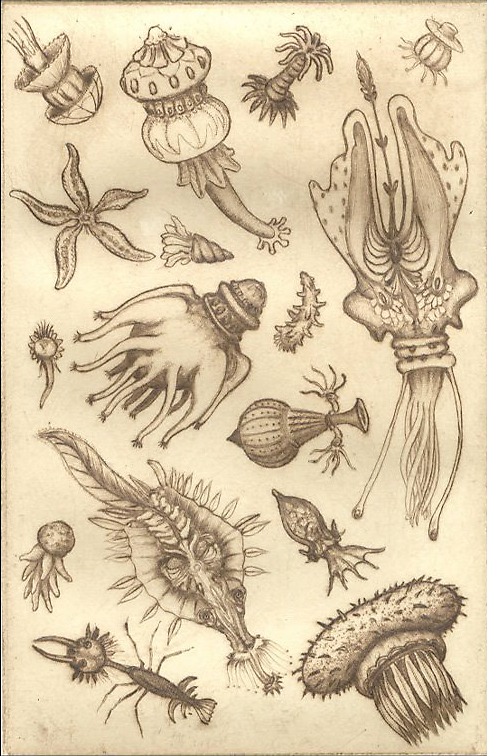
<p><span class="thumbnail-image-block ssNonEditable"><a href="javascript:showFullImage('/display/ShowImage?imageUrl=%2Fstorage%2Fjohn-martin-giraffe-and-ostrich.jpg%3F__SQUARESPACE_CACHEVERSION%3D1365957850435',1364,1200);"><img src="http://www.jrimagination.com/storage/thumbnails/8628627-22437837-thumbnail.jpg?__SQUARESPACE_CACHEVERSION=1365958065939" alt="" /></a><span class="thumbnail-caption" style="width: 630px;">WORDS AND PICTURES &ndash; These stylish, whimsical silhouettes with accompanying verses were characteristic of the illustrations in John Martin's Books.</span></span></p>]]></summary></entry><entry><title>What We Can Learn About Creativity This Flu Season</title><category term="Antony van Leeuwenhoek"/><category term="courage"/><category term="creative writing"/><category term="discovery"/><category term="microbiology"/><category term="perseverance"/><id>http://www.jrimagination.com/blog/2013/1/31/what-we-can-learn-about-creativity-this-flu-season.html</id><link rel="alternate" type="text/html" href="http://www.jrimagination.com/blog/2013/1/31/what-we-can-learn-about-creativity-this-flu-season.html"/><author><name>Marjorie Sarnat</name></author><published>2013-02-01T02:00:28Z</published><updated>2013-02-01T02:00:28Z</updated><summary type="html" xml:lang="en-US"><![CDATA[<p><span class="full-image-float-right ssNonEditable"><span><a href="http://bdmckenzie.blogspot.com/2006/05/animalcules.html" target="_blank"><img style="width: 387px;" src="http://www.jrimagination.com/storage/animalcules_illus.jpg?__SQUARESPACE_CACHEVERSION=1359683103337" alt="" /></a></span><span class="thumbnail-caption" style="width: 387px;">Artist <a href="http://bdmckenzie.blogspot.com/2006/05/animalcules.html">Brian McKenzie</a> depicts amazing Animalcules that are his &ldquo;purely imagined beings.&rdquo; Image &copy;Brian McKenzie. All Rights Reserved. Used by permission.</span></span>The holidays are over, but it&rsquo;s still the season&mdash;of the flu.</p>
<p>After Jan. 1, &ldquo;Season&rsquo;s Greetings&rdquo; takes on a whole other meaning, and not a friendly one either.</p>
<p>Our natural world provides us with endless beauty, from the grand mountains to perfect little rosebuds, from magnificent orca whales to exquisite little ladybugs.</p>
<p>Flu viruses are Mother Nature&rsquo;s children, too. Yes, they&rsquo;re nasty and we should avoid them as best we can, but in the spirit of creativity (flexibility of thought, open-mindedness, and seeing new perspectives) viruses, bacteria, and other microscopic creatures on Earth are visually aesthetic. There&rsquo;s a whole life system we can&rsquo;t see with our naked eyes but it&rsquo;s as stunningly intricate and beautiful as anything else in our natural world.</p>
<p>Microscopic life was first discovered by <a href="http://www.ucmp.berkeley.edu/history/leeuwenhoek.html">Antony van Leeuwenhoek</a> (1632-1723) in the mid 1600s. He called the organisms he saw &ldquo;Animalcules.&rdquo; His story is one of passion and the spirit of creativity.</p>]]></summary></entry><entry><title>The Creative Kid: A Personality Apart</title><id>http://www.jrimagination.com/blog/2012/10/27/the-creative-kid-a-personality-apart.html</id><link rel="alternate" type="text/html" href="http://www.jrimagination.com/blog/2012/10/27/the-creative-kid-a-personality-apart.html"/><author><name>Marjorie Sarnat</name></author><published>2012-10-27T22:00:14Z</published><updated>2012-10-27T22:00:14Z</updated><summary type="html" xml:lang="en-US"><![CDATA[<p><span class="full-image-block ssNonEditable"><img src="http://www.jrimagination.com/storage/16-group-of-kids.jpg?__SQUARESPACE_CACHEVERSION=1351369867111" alt="" /></span>Many children have amazing creative potential that is yet to be identified.&nbsp; Kids who play incredible music, paint amazing paintings, and invent astonishing inventions are obviously creative. But there are others whose creative genius is every bit as powerful, yet appears in more subtle ways and can even be mistaken for problematic.&nbsp;</p>
<p>Such kids do not try to be incorrigible; they have creative forces running through them that resist being suppressed. Highly creative personalities are often incompatible with the routines of everyday life and the typical school expectations.&nbsp;</p>
<p>These kids need outlets for channeling and expressing their creative talents. You can help by letting them know you believe their creativity is important, offering them tasks that challenge creative thought, and by rewarding them for their creative accomplishments.</p>]]></summary></entry><entry><title>Good News to Share</title><category term="Creative Genius"/><category term="creative genius"/><category term="lesson plans"/><id>http://www.jrimagination.com/blog/2012/10/21/good-news-to-share.html</id><link rel="alternate" type="text/html" href="http://www.jrimagination.com/blog/2012/10/21/good-news-to-share.html"/><author><name>Marty Safir</name></author><published>2012-10-21T21:01:00Z</published><updated>2012-10-21T21:01:00Z</updated><summary type="html" xml:lang="en-US"><![CDATA[<p>Congratulations to Marjorie and the team who contributed to the book,&nbsp;<em><a href="ss_temp_url">Creative Genius: How to Grow the Seeds of Creativity in Every Child</a>.</em> Prior to the book's release we shared advance copies with some key creativity experts. The response was validating and hugely <a href="http://www.jrimagination.com/creative-genius/">positive</a>. Marjorie feels honored by their praise of <em>Creative Genius</em>.</p>
<p style="text-align: center;"><img src="http://www.jrimagination.com/storage/15-on-top-of-great-wall-4.png?__SQUARESPACE_CACHEVERSION=1350851141563" alt="" /></p>
<p>I have watched Marjorie for years pore over much of the academic literature and information about creativity. Her art studio looks like an Amazon warehouse. In the book's creativity guide, she is able to take this research about the creative process and make it accessible to the layperson.</p>]]></summary></entry><entry><title>Four Fun Reads on Creativity Portal</title><category term="Creative Genius"/><category term="Creativity Portal"/><category term="art"/><category term="creative process"/><category term="daydreamers"/><category term="painting"/><id>http://www.jrimagination.com/blog/2012/10/4/four-fun-reads-on-creativity-portal.html</id><link rel="alternate" type="text/html" href="http://www.jrimagination.com/blog/2012/10/4/four-fun-reads-on-creativity-portal.html"/><author><name>Marjorie Sarnat</name></author><published>2012-10-04T19:00:00Z</published><updated>2012-10-04T19:00:00Z</updated><summary type="html" xml:lang="en-US"><![CDATA[<p><span class="full-image-block ssNonEditable"><span><img src="http://www.jrimagination.com/storage/14-Number-4-artwork.jpg?__SQUARESPACE_CACHEVERSION=1349280317244" alt="" /></span><span class="thumbnail-caption" style="width: 640px;"></span></p>
<p>I&rsquo;m proud to be a regular feature author on <a href="http://www.creativity-portal.com/articles/marjorie-sarnat/" target="_blank">Creativity Portal&rsquo;s website</a>, which offers fascinating articles by people from a variety of backgrounds. My articles address creative thinking in general along with a focus on creativity in kids.</p>
<p>These links open a new window to their website, but if you happen to get lost over there, don&rsquo;t forget to come back soon, because we have some amazing news to share in the next few days. Check out the following:</p>
<p><strong><a href="http://www.creativity-portal.com/articles/marjorie-sarnat/are-you-a-closet-creative.html" target="_blank">Are You a Closet Creative?</a></strong></p>
<p>Creative people have an ability to identify and solve problems in their personal lives and careers. When first attempts fall short, they formulate Plans B, C, D, or Q as needed. They find ways around roadblocks, come up with quick fixes for little emergencies, and design strategies for tackling serious problems. Creative thinkers are beautifully equipped for navigating the challenges of life. Who are these Creative Heroes? One of them may be you&hellip; <a href="http://www.creativity-portal.com/articles/marjorie-sarnat/are-you-a-closet-creative.html" target="_blank">more &gt;</a></p>
<p><strong><a href="http://www.creativity-portal.com/articles/marjorie-sarnat/creative-talent-comes-out-to-play.html" target="_blank">Creative Talent Comes Out to Play</a></strong></p>
<p>I&rsquo;m a big fan of board games, parlor games, and any games that kids and families enjoy. They&rsquo;re all designed for fun but some games have hidden benefits, too; they reveal creative talents.</p>
<p>Observe your child at play with some of the games listed at the end of this article, and notice if he or she excels at one or more of them&hellip; <a href="http://www.creativity-portal.com/articles/marjorie-sarnat/creative-talent-comes-out-to-play.html" target="_blank">more &gt;</a></p>
<p><strong><a href="http://www.creativity-portal.com/articles/marjorie-sarnat/practical-ways-to-encourage-creativity.html" target="_blank">Practical Ways to Encourage Creativity in Kids</a></strong></p>
<p>As the mom of two incredible kids, one special needs and one identified as gifted, and as a former teacher, I know that creative genius can arise out of any child anywhere. You cannot predict creative aptitude by looking at typical classroom performance. My special needs daughter astonishes me with her handmade folk dolls as much as my gifted son does with his writing skills.</p>
<p>Creative kids are often daydreamers. The word, "daydreamer," has traditionally held negative connotations. Words such as unaware, lazy, and unmotivated are often used to describe daydreamers. But the truth is almost always the opposite. What's going on in a dreamer&rsquo;s head is likely to be original ideation, visualization, imaginative thought, and creative problem solving. Daydreaming is a good thing&hellip; <a href="http://www.creativity-portal.com/articles/marjorie-sarnat/practical-ways-to-encourage-creativity.html" target="_blank">more &gt;</a></p>
<p><strong><a href="http://www.creativity-portal.com/articles/marjorie-sarnat/even-if-you-cant-draw.html" target="_blank">Even If You Can&rsquo;t Draw a Straight Line, You Can Be an Artist!</a><br /></strong><em>For Ages Toddler to Codger</em></p>
<p>I&rsquo;ve heard the &ldquo;can&rsquo;t draw a straight line&rdquo; lament many times from those who wish to be more artistic but lack the confidence. The truth is that straight lines have little to do with artistic expression. Creativity does.</p>
<p>Relax and enjoy the experience of painting whether you have traditional art skills or not, and creativity will flow. Children already know this. Here are two easy but mind-expanding art projects you might want to do right along with your kids&hellip; <a href="http://www.creativity-portal.com/articles/marjorie-sarnat/even-if-you-cant-draw.html" target="_blank">more &gt;</a></p>]]></summary></entry><entry><title>Creativity Soars, But Sometimes It Hops</title><category term="Barbara Corcoran"/><category term="Dr. E. Paul Torrance"/><category term="creativity"/><category term="games"/><id>http://www.jrimagination.com/blog/2012/7/28/creativity-soars-but-sometimes-it-hops.html</id><link rel="alternate" type="text/html" href="http://www.jrimagination.com/blog/2012/7/28/creativity-soars-but-sometimes-it-hops.html"/><author><name>Marjorie Sarnat</name></author><published>2012-07-28T19:00:28Z</published><updated>2012-07-28T19:00:28Z</updated><summary type="html" xml:lang="en-US"><![CDATA[<p><span class="full-image-block ssNonEditable"><span><img src="http://www.jrimagination.com/storage/13-illus-hopscotch-blog-post-2.jpg?__SQUARESPACE_CACHEVERSION=1343497990741" alt=""></span></span></p>
<p>In my childhood I found the flat sidewalks of Chicago made hopscotch a fun option for kids with nothing to do. The classic game of active amusement could become a neighborhood tournament through creative innovation back then. Kids at play often reveal astonishing creative talents.</p>
<p><strong>Hopping With Holly</strong></p>
<p>Holly, a friend from those days, told me about the summer she stayed with her aunt and had no place to play. But she befriended the girl who lived next door.</p>
<p>They found some chalk and drew a hopscotch course on the sidewalk. They played every day, and invented new hopscotch courses with twists and turns and challenging passages. Soon other kids were joining in.</p>
<p>By midsummer Holly and her friend had organized daily hopscotch contests and even gave out award certificates they made themselves.&nbsp;</p>
<p>With a stick of chalk and a lot of creativity Holly and her friend turned that summer into something special.</p>]]></summary></entry><entry><title>Guide Your Kids Down the Creative Rapids</title><category term="Csikszentmihalyi"/><category term="creative flow"/><category term="creativity"/><category term="kids"/><category term="students"/><id>http://www.jrimagination.com/blog/2012/6/3/guide-your-kids-down-the-creative-rapids.html</id><link rel="alternate" type="text/html" href="http://www.jrimagination.com/blog/2012/6/3/guide-your-kids-down-the-creative-rapids.html"/><author><name>Marjorie Sarnat</name></author><published>2012-06-04T06:00:12Z</published><updated>2012-06-04T06:00:12Z</updated><summary type="html" xml:lang="en-US"><![CDATA[<p><span class="full-image-block ssNonEditable"><span><img style="width: 640px;" src="http://www.jrimagination.com/storage/spot-illus-riding-the-creative-rapids.png?__SQUARESPACE_CACHEVERSION=1338758022008" alt="" /></span></span></p>
<p>There&rsquo;s a magical mind chemistry known as &ldquo;Creative Flow,&rdquo; where we feel in sync with our task, and fully focused on our goal. The term was coined by psychologist and author, Mihaly <span>Csikszentmihalyi</span> at the University of Chicago.</p>
<p>&ldquo;Flow&rdquo; describes a particular state of heightened&nbsp; consciousness. As Prof. Csikszentmihlyi describes it, creative people are at their peak when they experience a sense of &ldquo;<em>unified flowing from one moment to the next, in which we feel in control of our actions, and in which there is little distinction between self and environment; between stimulus and response; or between past, present, and future.</em>&rdquo;</p>
<p><strong>Flowing On All Fours</strong></p>
<p>We are most likely to get into flow when our environment has four essential factors. The principles of flow hold true for kids, as well. Provide these factors for your kids, and you may be amazed.</p>]]></summary></entry><entry><title>“That’s The Stupidest Idea I’ve Ever Embraced”</title><category term="brainstorming"/><category term="creative process"/><category term="fear of failure"/><category term="ideas"/><id>http://www.jrimagination.com/blog/2012/5/20/thats-the-stupidest-idea-ive-ever-embraced.html</id><link rel="alternate" type="text/html" href="http://www.jrimagination.com/blog/2012/5/20/thats-the-stupidest-idea-ive-ever-embraced.html"/><author><name>Marjorie Sarnat</name></author><published>2012-05-21T00:45:00Z</published><updated>2012-05-21T00:45:00Z</updated><summary type="html" xml:lang="en-US"><![CDATA[<p>A stupid idea is a thing of beauty. It’s in the lifeblood of creative thinking. The way to get a great idea is to generate many ideas freely, then select and refine the best.</p>

<p>Ideas flow out in many forms—stupid, weird, silly, outrageous, weak, funny, and as sparks of genius. That assortment comes with the territory; it’s called “creative process.”</p>

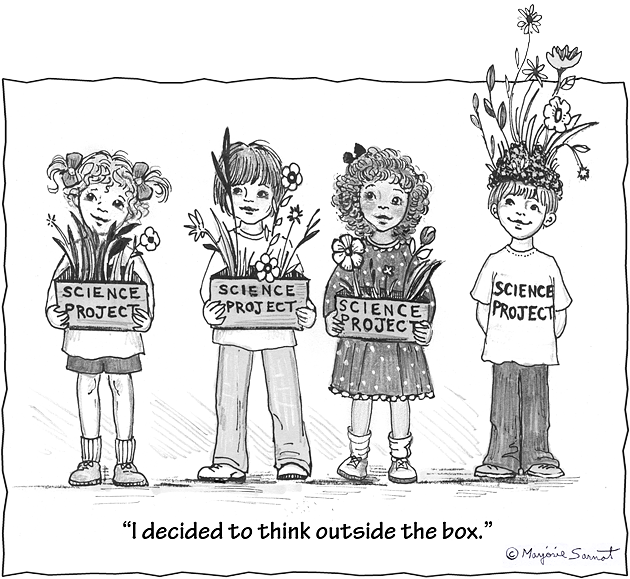
<p>It takes courage not to filter your ideas. Holding back for fear of looking ridiculous keeps genius ideas from flowing forth.</p>]]></summary></entry><entry><title>Advice from Outside the Box</title><category term="Dr. E. Paul Torrance"/><category term="circles and squares task"/><category term="creative thinking"/><category term="creativity"/><category term="outside the box"/><category term="problem solving"/><id>http://www.jrimagination.com/blog/2012/3/13/advice-from-outside-the-box.html</id><link rel="alternate" type="text/html" href="http://www.jrimagination.com/blog/2012/3/13/advice-from-outside-the-box.html"/><author><name>Marjorie Sarnat</name></author><published>2012-03-13T12:00:11Z</published><updated>2012-03-13T12:00:11Z</updated><summary type="html" xml:lang="en-US"><![CDATA[<p>To live successfully&mdash;both personally and professionally&mdash;you must identify problems and think of ways to solve them. And if your first attempts don&rsquo;t work, you need the ability to formulate Plan B, C, D, and Q. You must figure out ways around roadblocks, come up with quick fixes for little emergencies, and design effective strategies for tackling serious problems. Creative thinkers are best equipped to navigate the challenges of life.&nbsp;<br /><span class="full-image-block ssNonEditable"><span><img src="http://www.jrimagination.com/storage/cartoon-thinking-outside-box_final.png?__SQUARESPACE_CACHEVERSION=1336941176695" alt="" /></span></span></p>
<p>Here are some of my favorite anecdotes featuring creative problem solvers. These lighthearted examples are from everyday life, but their &ldquo;outside the box&rdquo; approach]]></summary></entry><entry><title>Knowledge is Power but Dreamers Shape the World</title><category term="Malcolm Gladwell"/><category term="creative thinking"/><category term="creative writing"/><category term="creativity"/><category term="elaboration"/><category term="flexibility"/><category term="knowledge"/><category term="science"/><id>http://www.jrimagination.com/blog/2012/2/5/knowledge-is-power-but-dreamers-shape-the-world.html</id><link rel="alternate" type="text/html" href="http://www.jrimagination.com/blog/2012/2/5/knowledge-is-power-but-dreamers-shape-the-world.html"/><author><name>Marjorie Sarnat</name></author><published>2012-02-05T20:00:11Z</published><updated>2012-02-05T20:00:11Z</updated><summary type="html" xml:lang="en-US"><![CDATA[<p><span class="full-image-float-left ssNonEditable"><span><img src="http://www.jrimagination.com/storage/cartoon-Postcard-from-the-Moon.png?__SQUARESPACE_CACHEVERSION=1328278868176" alt="" /></span></span></p>
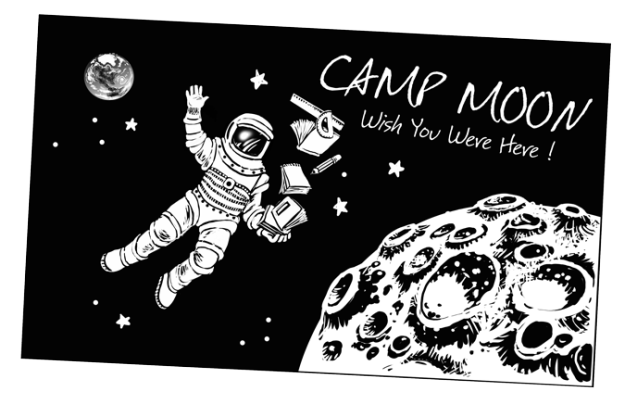
<p>Stop and look around at any given moment and you see what startling advances we enjoy. To be surrounded by such accomplishments we must think to ourselves how much people must need to <em>know</em> to be able to create so many marvelous things. And, yes, it&rsquo;s true that knowledge is the building block upon which great achievements are made. But it takes something else, as well.</p>
<p>Knowledge is the foundation of achievement, but the formula doesn&rsquo;t add up without one essential ingredient: creative thinking. Creativity blossoms in fields of knowledge. Knowledge + Creative Thinking = Achievement.</p>
<p>Creative thinking is rarely addressed in school, yet it is the number one factor that distinguishes our great achievers from the ordinary in every field. Combined with knowledge, creativity works wonders.]]></summary></entry><entry><title>E. Paul Torrance Concepts Illustrated</title><category term="creative thinking"/><category term="e. paul torrance"/><category term="elaboration"/><category term="flexibility"/><category term="fluency"/><category term="originality"/><id>http://www.jrimagination.com/blog/2011/11/11/e-paul-torrance-concepts-illustrated.html</id><link rel="alternate" type="text/html" href="http://www.jrimagination.com/blog/2011/11/11/e-paul-torrance-concepts-illustrated.html"/><author><name>Marty Safir</name></author><published>2011-11-11T14:29:43Z</published><updated>2011-11-11T14:29:43Z</updated><summary type="html" xml:lang="en-US"><![CDATA[Marjorie illustrated these E. Paul Torrance concepts and we thought we'd liven up the the blog and show them to you. These are part of our <a href="http://www.jrimagination.com/freebies/Four-Components-Creative-Thinking_FREE.pdf"><strong><span class="caps"><span class="caps">FREE </span></span>poster download</strong></a> which includes a short definition of each term. It's on our <a href="http://www.jrimagination.com/freebies/"><strong>Freebies</strong></a> page along with other goodies. Don't forget to grab our <span class="caps"><span class="caps">FREE </span></span>"Fluency" lesson plan, aptly entitled, <a href="http://www.jrimagination.com/freebies/Fluency-Flurry_LessonPlan_FREE.pdf"><strong>"Fluency Flurry."</strong></a> Enjoy!</p>
<p>Read more about E. Paul Torrance, also known as "The Father of Creativity," in Marjorie's post below.
]]></summary></entry><entry><title>The Powerful Fours of Creative Thinking</title><category term="creative thinking"/><category term="e. paul torrance"/><category term="elaboration"/><category term="flexibility"/><category term="fluency"/><category term="originality"/><id>http://www.jrimagination.com/blog/2011/11/11/the-powerful-fours-of-creative-thinking.html</id><link rel="alternate" type="text/html" href="http://www.jrimagination.com/blog/2011/11/11/the-powerful-fours-of-creative-thinking.html"/><author><name>Marjorie Sarnat</name></author><published>2011-11-11T08:00:00Z</published><updated>2011-11-11T08:00:00Z</updated><summary type="html" xml:lang="en-US"><![CDATA[<p><span class="full-image-float-right ssNonEditable"><span><img style="width: 375px;" src="http://www.jrimagination.com/storage/a-fluency-of-ideas_final.png?__SQUARESPACE_CACHEVERSION=1336941258426" alt="" /></span></span>I was in high school when I first came across the writings of the man who would become my lifetime hero. There isn&rsquo;t another individual who has affected my thinking and my career direction in life as much as he has. Dr. E. Paul Torrance (1915 &ndash; 2003) is called <em>The Father of Creativity</em> among educators. He dedicated his life&rsquo;s work to increasing the recognition, acceptance, and development of the creative personality in education. He did his research at various universities, including <strong><a href="http://www.coe.uga.edu/torrance/about/e-paul-torrance/" target="_blank">The University of Georgia</a>.</strong></p>
<p><strong>Astonished by Students</strong></p>
<p>Torrance&rsquo;s interest in creativity grew from his struggles as a teacher working with difficult or failing students. He observed the astonishing fact that many of the least successful students went on to become highly successful in business, the arts, science, education, politics, and more. Torrance determined to discover the <em>other</em> forces, outside of traditional education, that power people toward achievement.&nbsp;He discovered creative thinking!</p>]]></summary></entry><entry><title>Creative Genius: It Takes Both Sides</title><category term="Creative Genius"/><category term="children"/><category term="convergent"/><category term="creative thinking"/><category term="creativity"/><category term="divergent"/><category term="left brain"/><category term="right brain"/><id>http://www.jrimagination.com/blog/2011/9/30/creative-genius-it-takes-both-sides.html</id><link rel="alternate" type="text/html" href="http://www.jrimagination.com/blog/2011/9/30/creative-genius-it-takes-both-sides.html"/><author><name>Marjorie Sarnat</name></author><published>2011-09-30T15:31:00Z</published><updated>2011-09-30T15:31:00Z</updated><summary type="html" xml:lang="en-US"><![CDATA[<p><span class="full-image-block ssNonEditable"><span><img src="http://www.jrimagination.com/storage/My-right-brain-is-cartoon_final.png?__SQUARESPACE_CACHEVERSION=1336941314502" alt="" /></span></span></p>
<p>What is Creativity? Creativity is about problem solving in a <em>new</em> way. It is using skills to generate ideas and bring about something unique and valuable. Although the creative process involves imagination and self expression, it must be purposeful in reaching &ldquo;outside the box&rdquo; to solve a problem, meet a need, or accomplish a goal.</p>
<p>Although some children are innately more creatively inclined, all kids can learn creative thinking skills and get in the habit of using them for problem solving in life, work, and play.</p>
<p><strong>Divergent And Convergent Thinking</strong></p>
<p>We often hear the terms &ldquo;right brain&rdquo; and &ldquo;left brain&rdquo; thinking. This refers to the two hemispheres of the brain, each of which dominate different thought processes. In reality, both hemispheres need to work together for us to do anything meaningful.</p>]]></summary></entry><entry><title>Creative Connections</title><category term="Creative Genius"/><category term="Seurat"/><category term="analogies"/><category term="children"/><category term="connections"/><category term="creative playground"/><category term="creativity"/><category term="games"/><category term="kids"/><category term="metaphors"/><category term="students"/><id>http://www.jrimagination.com/blog/2011/9/21/creative-connections.html</id><link rel="alternate" type="text/html" href="http://www.jrimagination.com/blog/2011/9/21/creative-connections.html"/><author><name>Marjorie Sarnat</name></author><published>2011-09-21T15:50:34Z</published><updated>2011-09-21T15:50:34Z</updated><summary type="html" xml:lang="en-US"><![CDATA[<p><span class="full-image-float-left ssNonEditable"><span><img style="width: 630px;" src="http://www.jrimagination.com/storage/cartoon-seurat_final.png?__SQUARESPACE_CACHEVERSION=1336941366272" alt="" /></span></span></p>
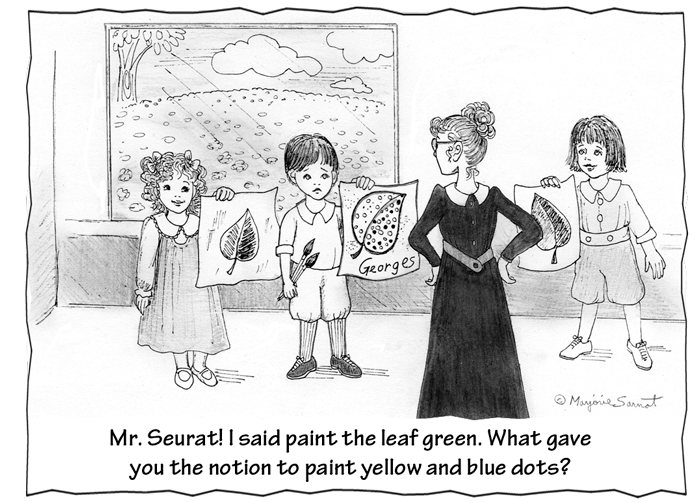
<p>Creative thinkers play with metaphors and analogies. This means that they look at one thing as if it were another thing. They ask, &ldquo;What else could this be like?&rdquo; They make new connections between unrelated things.&nbsp;</p>]]></summary></entry><entry><title>Brainstorming: A Climate for Creative Growth</title><category term="Creative Genius"/><category term="brainstorming"/><category term="children"/><category term="creative playground"/><category term="creativity"/><category term="ideas"/><category term="students"/><id>http://www.jrimagination.com/blog/2011/9/13/brainstorming-a-climate-for-creative-growth.html</id><link rel="alternate" type="text/html" href="http://www.jrimagination.com/blog/2011/9/13/brainstorming-a-climate-for-creative-growth.html"/><author><name>Marjorie Sarnat</name></author><published>2011-09-13T14:00:00Z</published><updated>2011-09-13T14:00:00Z</updated><summary type="html" xml:lang="en-US"><![CDATA[<p><span class="full-image-float-left ssNonEditable"><span><img style="width: 640px;" src="http://www.jrimagination.com/storage/GirlCaughtInBrainstorm.png?__SQUARESPACE_CACHEVERSION=1315921997899" alt="" /></span></span></p>
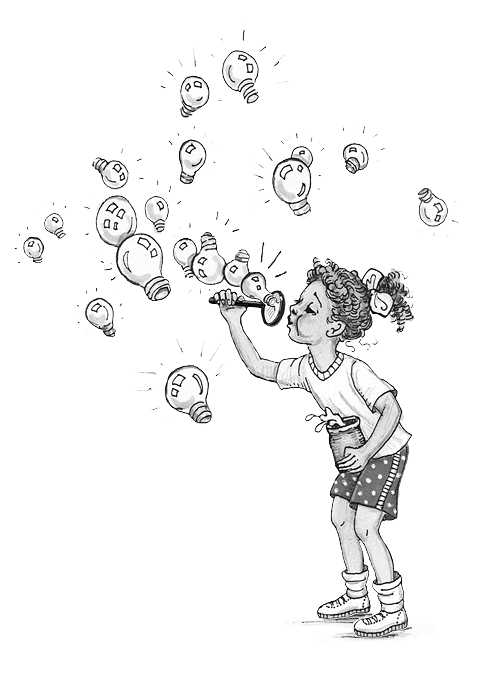
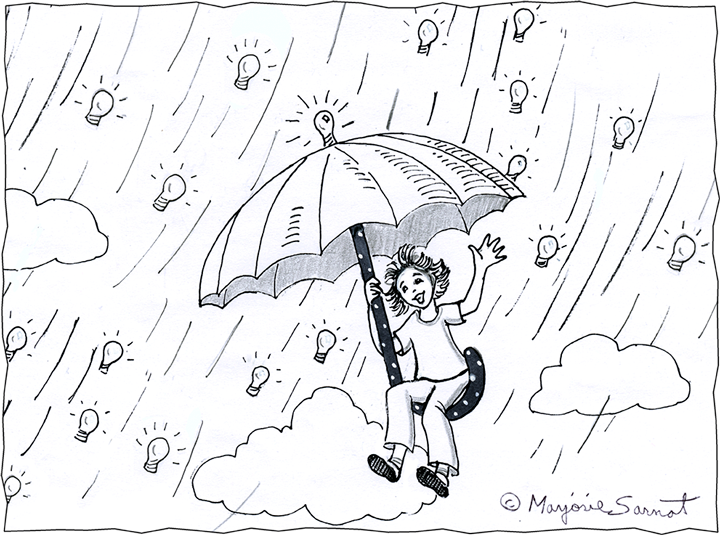
<p>Try this the next time you have a rainy day and your child or classroom has free time. You can turn a rainy day into an amazing brainstorm!</p>
<p>Brainstorming is a technique for generating a free-flow of ideas to solve a problem within a short period of time. Brainstorming can be practiced by individuals or by a guided group of two or more.</p>
<p>Groups need a facilitator, whose role is to encourage participation, to embrace and record each idea, and to remind participants to defer judgment, however wild an idea may seem.&nbsp;</p>
<p>Although brainstorming in a group may not always produce the best ideas, the sessions offer other valuable benefits. They boost confidence, warm up creative muscles, improve classroom spirit, and create a trusting social climate. Creative thought flourishes in positive psychological environments.</p>
]]></summary></entry><entry><title>Who Are The Creative Kids?</title><category term="Creative Genius"/><category term="creative playground"/><category term="creativity"/><category term="daydream"/><category term="imagination"/><id>http://www.jrimagination.com/blog/2011/8/5/who-are-the-creative-kids.html</id><link rel="alternate" type="text/html" href="http://www.jrimagination.com/blog/2011/8/5/who-are-the-creative-kids.html"/><author><name>Marjorie Sarnat</name></author><published>2011-08-05T18:00:55Z</published><updated>2011-08-05T18:00:55Z</updated><summary type="html" xml:lang="en-US"><![CDATA[<p>&nbsp;</p>
<p><span class="full-image-block ssNonEditable"><span><img style="width: 630px;" src="http://www.jrimagination.com/storage/cartoon-creative-condition_final.png?__SQUARESPACE_CACHEVERSION=1336942317367" alt="" /></span></span>As the mom of two incredible kids, one special needs and one who was identified as &ldquo;gifted,&rdquo; and as a former teacher, I know that creative genius can arise out of any child anywhere. You cannot predict it by looking at typical classroom performance. My special needs daughter astonishes me with her ideas and handmade folk dolls as much as my gifted son does with his writing and acting abilities.</p>
<p>Many kids assumed to be &ldquo;attention deficit&rdquo; <a href="http://mistakenforadhd.com/626/adhd-kids-are-more-creative/">look like they're daydreaming</a>, and maybe they are&mdash;in a good way! Your daydreamer could be laying the early foundations of a groundbreaking innovation he'll someday bring to fruition.</p>
<p><strong>Dreamers&rsquo; Lib</strong></p>
<p>The word, &ldquo;daydream,&rdquo; has negative connotations, such as apathetic, slow, and unmotivated. But the truth is almost always the opposite.]]></summary></entry><entry><title>Imagination Knows No Bounds</title><category term="Creative Genius"/><category term="answers"/><category term="brainstorming"/><category term="conduct"/><category term="creative thinking"/><category term="creativity"/><category term="fluency"/><category term="workshop"/><id>http://www.jrimagination.com/blog/2011/8/1/imagination-knows-no-bounds.html</id><link rel="alternate" type="text/html" href="http://www.jrimagination.com/blog/2011/8/1/imagination-knows-no-bounds.html"/><author><name>Marjorie Sarnat</name></author><published>2011-08-01T18:01:00Z</published><updated>2011-08-01T18:01:00Z</updated><summary type="html" xml:lang="en-US"><![CDATA[<div>
<p>I recently provided an after school enrichment program at a local elementary school. I was trying out some new ideas to spark creative thinking in kids. The program was only open to students in 2nd to 5th grade, but the principal of the school mistakenly invited kindergarteners and first graders to join, too.</p>
<p>When I arrived at school the principal told me that the little ones had no other place to go during the program, so I had to include them. I was concerned because I didn&rsquo;t believe children so young could possibly keep up with the older ones. I was wrong.</p>
<p>I prompted the group of 14 to generate new uses for everyday items (see <a href="http://www.jrimagination.com/freebies/">"What Can You Do with a Paper Clip?"</a>), sketch imaginary animals, make up stories based on random images, invent new toys, and solve outrageous problems. The youngest ones eagerly embraced the challenges and ran circles around most of the 4th and 5th graders.
]]></summary></entry><entry><title>Celebrate Your Child's Creativity</title><category term="Creative Genius"/><category term="creativity"/><category term="fluency"/><category term="intelligence"/><category term="school"/><id>http://www.jrimagination.com/blog/2011/6/15/celebrate-your-childs-creativity.html</id><link rel="alternate" type="text/html" href="http://www.jrimagination.com/blog/2011/6/15/celebrate-your-childs-creativity.html"/><author><name>Marjorie Sarnat</name></author><published>2011-06-15T18:12:05Z</published><updated>2011-06-15T18:12:05Z</updated><summary type="html" xml:lang="en-US"><![CDATA[<p>When I was in the fourth grade our teacher, Miss Malkin, gave us an unusual assignment. She wrote a word on the chalkboard and gave us ten minutes to list as many words as we could think of using only the word's letters.</p>

<p>When the time was up, Miss Malkin asked the top student in our class how many words she had. Bonnie announced that she had 34 words. The teacher asked if anyone had more.</p>

<p>I was the only other student who raised a hand, and I reported that I had 116 words. As Miss Malkin approached my desk she declared loudly, "You must have done it incorrectly." But when she scrutinized my list, she saw that I had, indeed, done it correctly! </p>

<p>Miss Malkin was slack-jawed, and sat staring at me for the longest time. (I didn't think I had done anything special — to me, the assignment was a snap.) But Miss Malkin was clearly astonished, for I was a bright student, but rarely earned the highest grades in our class. </p>

<p><p>Miss Malkin didn't know anything about creativity. If she had, she would have known that creative thinking embodies the skills at work in a task such as this...</p>
]]></summary></entry></feed>